
"University of Glasgow building hit with red paint in fresh vandalism"

So read the headlines across local Glasgow news outlets in March 2026.

This incident created some unique challenges to removing the graffiti on this arguable design pinnacle of the Glasgow city skyline.
The site had been targeted approximately 12 months before and the previous removal had left clean "primed" stone. The paint in the subsequent attack had adhered particularly well to the newly cleaned surface.
The archway has some beautiful and unique ornate carving and features. This increased the surface area and also meant that some small areas were particularly difficult to access.
The glass windows in the arch were exceptionally delicate.
Our Brief

Simply, to remove the graffiti from the stone work while ensuring the protection of the historic and stunning substrate. The doors were to be attended to seperately at by an expert wood finish conservator.
Our Method
Time was taken to properly research the building, even down to the likely quarry sites that produced the gorgeous blonde sandstone that is unique in Glasgow (you will more often find red sandstone in the city). With this information, sampling and tests were undertaken to create the gentlest, yet most effective method of removal.

Project Commences....
Highly trained operatives worked for over 5 days at the site. Carefully removing the paint from the glass and frames, before moving onto the stonework itself.
The gentle cleaning method paid off with good paint removal, without sacrificing any element of the stone work.

Results?
With good preparation and planning, the project was a success. All this in spite of a number of unique challenges. The selected cleaning method successfully removed the graffiti without causing damage to the historic sandstone, avoiding the aggressive techniques that can permanently alter the surface of heritage masonry. The natural character, texture and appearance of the stone were retained, allowing the architectural details of the entrance to once again become the focus. Projects such as this demonstrate that successful graffiti removal on historic buildings is not simply about removing paint. It requires an understanding of traditional materials, careful testing, patience and a commitment to preserving the fabric of the building itself.
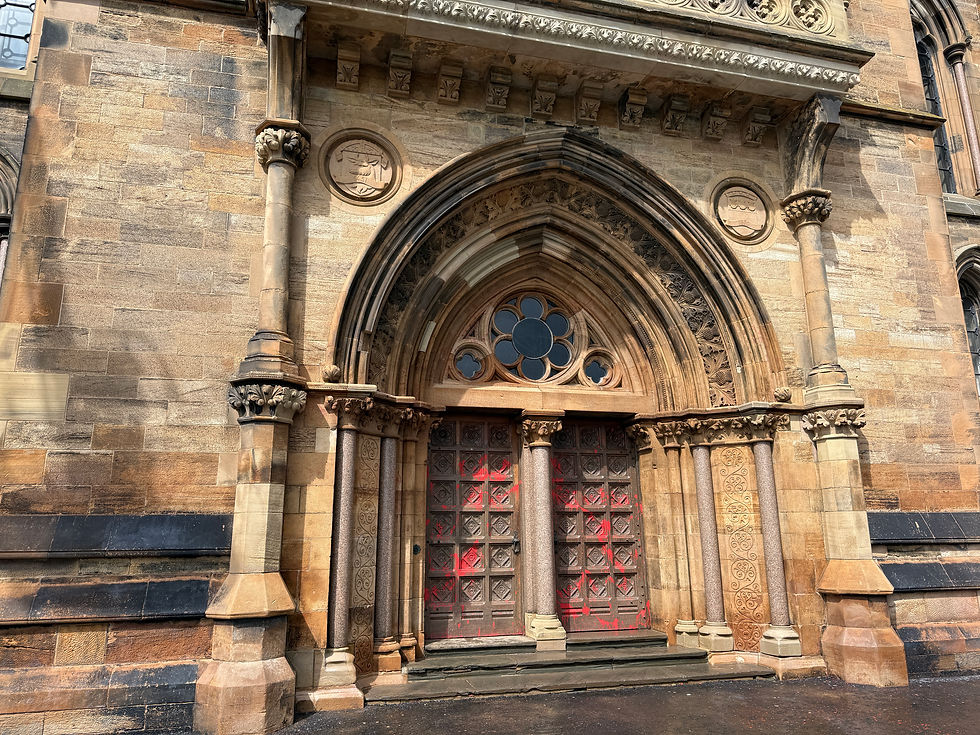
Today, the entrance once again reflects the beauty of one of Glasgow's most important architectural landmarks, with the graffiti removed and the historic stonework protected for the future.
Is conservation an important factor in your project?
